Hit on Foot, on a Bike or on the TTC: Accident Benefits in Toronto
Plenty of Torontonians don't own a car, and since July 2026 that matters a lot after a crash. Who pays your accident benefits, what's no longer covered, and the Toronto deadlines.
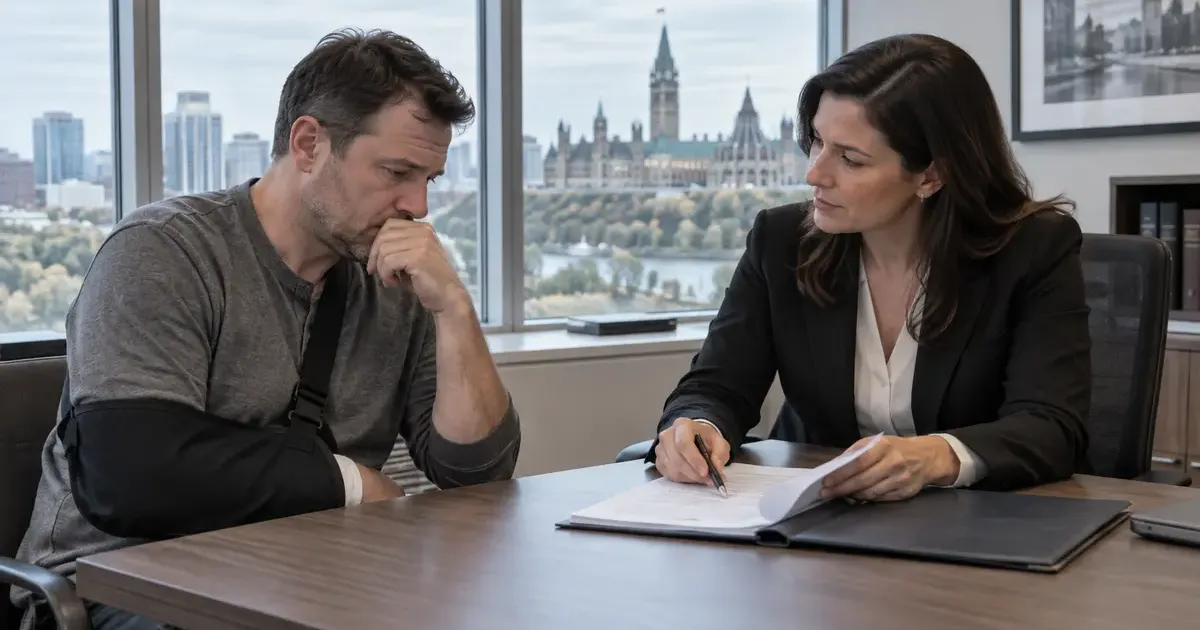
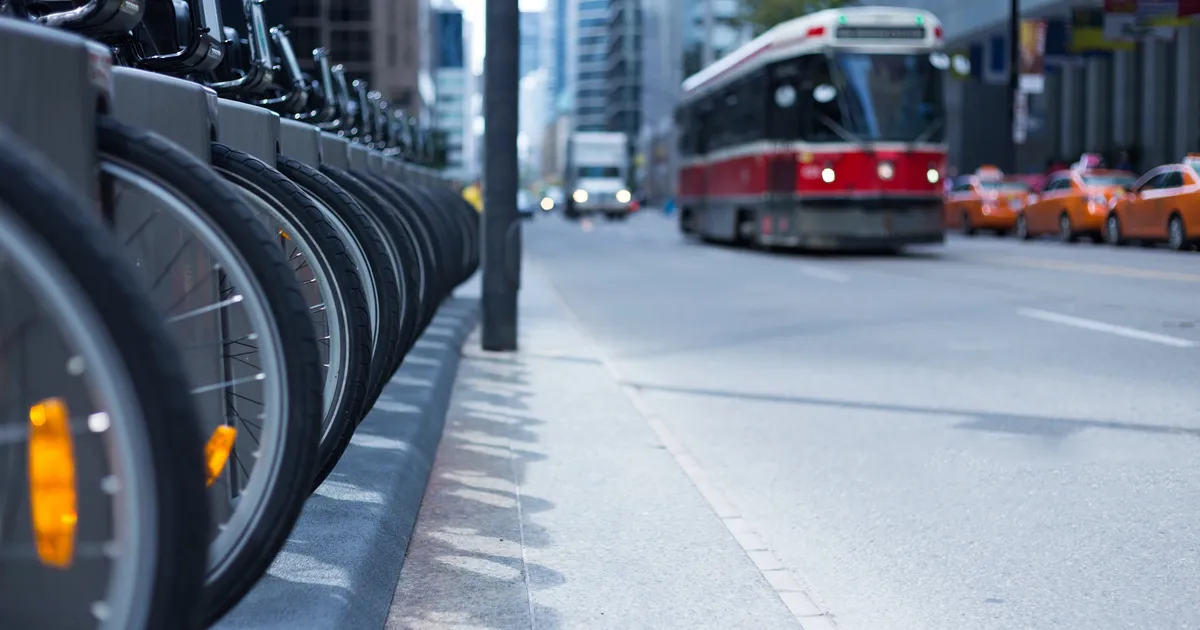
Toronto is a city where a lot of people get around without a car of their own. They walk, cycle, ride the TTC or grab a rideshare, and when one of them is hit, the first question isn't really about lawyers at all. It's which insurance company is supposed to pay, and since Ontario's accident-benefit changes took effect on July 1, 2026, the answer shapes what you can actually get. This guide walks through how Ontario's no-fault accident benefits work for people who don't own a car, what the 2026 changes took off the standard menu, and the Toronto-specific deadlines that sit alongside them.
The stakes aren't abstract here. The City's own Vision Zero report counts 39 people killed on Toronto's roads in 2025, and 19 of them were pedestrians, the largest single group, along with an estimated 255 serious-injury collisions over the year.
Which insurer pays your accident benefits if you don't own a car?
You don't need your own policy to get accident benefits in Ontario. The Insurance Act sets a fixed order for who pays, and it works down the list until it finds an insurer. If you were on foot or on a bike, the order is:
- Any auto policy you're insured under. That includes a policy where you're the named insured or a listed driver, and a spouse's or parent's policy if you're their spouse or dependant.
- If there's none, the insurer of the car that struck you.
- If that fails, the insurer of any other vehicle involved in the incident.
- Last, the Motor Vehicle Accident Claims Fund, which steps in when, for example, there's no insurance to claim against.
If you were a passenger, on a bus, a streetcar, a taxi or in a rideshare, the order is almost the same, except that the second stop is the insurer of the vehicle you were riding in. So a car-free Torontonian whose spouse insures the family car claims through the spouse's insurer, while someone with no connection to any policy usually ends up claiming from the driver's insurer. It decides who you'll be dealing with for months, so it's one of the first things a personal injury lawyer in Toronto will want to pin down.
What did the July 2026 changes take away?
As of July 2026, medical, rehabilitation and attendant care benefits stay mandatory, and nearly everything else became optional, according to the Financial Services Regulatory Authority of Ontario. Here's what moved to the optional list:
- Income replacement, non-earner and caregiver benefits
- Housekeeping and home maintenance, visitors' expenses, lost educational expenses, and damage to clothing, glasses and hearing aids
- Death and funeral benefits
The part that matters most for people without a car is who those optional benefits cover. Under the Statutory Accident Benefits Schedule, those optional benefits now apply only to the named insured, their spouse, their dependants and the drivers listed on the policy, and that rule applies despite anything else the policy says. So if a driver bought generous optional income replacement and then hits you in a crosswalk on Bloor Street, that coverage isn't yours to draw on unless you fall into one of those groups. A pedestrian or cyclist with no policy of their own, and no spouse or parent whose policy covers them, is generally left with the mandatory medical, rehabilitation and attendant care benefits.
Two other rules are worth knowing about. For accidents on or after July 1, 2026, the auto insurer has to pay medical and rehabilitation costs (other than medication) even if a workplace or private health plan would cover them, which used to be the other way around. And the long-standing cap still applies to minor injuries such as sprains, strains and whiplash, where medical and rehabilitation benefits are limited to $3,500 plus HST unless there's compelling evidence of a pre-existing condition.
If benefits won't replace your income, what will?
That's where the second track comes in. Alongside the no-fault benefits, you may be able to sue the at-fault driver, and that lawsuit can claim losses the benefits don't cover. For a car-free person who's now missing out on optional income replacement, the lawsuit often carries more weight than it used to.
It comes with its own rules, though. A claim for pain and suffering after a car crash only succeeds if the injury is a permanent serious impairment of an important function, or permanent serious disfigurement, or death. Even then, a statutory deductible comes off the award, and for 2026 FSRA has set it at $47,913.01, falling away only once the award goes above $159,708.71. Toronto lawsuits are filed in the Superior Court of Justice, whose civil courthouse is at 330 University Avenue, and Toronto is one of only three Ontario cities where most civil cases must go to mandatory mediation within 180 days of the first defence being filed. The basic deadline to start the lawsuit is two years, and it doesn't wait for the benefits side to wrap up.
If the dispute is with the insurer over your benefits instead, it doesn't go to court at all. It goes to the Licence Appeal Tribunal, a province-wide tribunal, so the two tracks run in different places under different rules.
What if you fell on a sidewalk or an icy condo walkway?
Not every Toronto injury involves a vehicle, and the falls come with some of the shortest deadlines in Ontario law. Toronto doesn't run under the Municipal Act like most Ontario cities. It has its own statute, the City of Toronto Act, 2006, and between that Act and Ontario's Occupiers' Liability Act there are a few rules that are easy to miss:
- 10 days to notify the City. If you're hurt because a road or sidewalk wasn't kept in proper repair, written notice of the claim, with the date, time and location, has to be served on the city clerk or sent by registered mail within 10 days. A judge can excuse a late notice if there's a reasonable excuse and the City isn't prejudiced, and the rule doesn't apply if the person died, but it's risky to count on a judge's discretion.
- Snow and ice on City sidewalks. Except in cases of gross negligence, the City isn't liable for an injury caused by snow or ice on a sidewalk, which is a much harder standard to meet than ordinary carelessness.
- 60 days for private property. For a slip on snow or ice in a condo's common area, a plaza or a store entrance, the Occupiers' Liability Act requires written notice to the occupier or its snow-removal contractor within 60 days. That rule is specific to snow and ice, so a fall on a wet lobby floor isn't caught by it.
In a city of condo towers and long winters, those last two often decide whether there's a claim at all, so it's worth getting advice quickly.
What should you ask a Toronto personal injury lawyer?
Most people with an injury claim hire a private firm on a contingency basis, where the lawyer's fee is a percentage of what you recover and there's no fee if there's no recovery. A percentage-based retainer in Ontario has to use the Law Society's standard form contingency fee agreement, you're entitled to the Law Society's consumer guide before you sign, and a firm that advertises contingency fees has to tell you its general maximum percentage. Our Ottawa injury guide explains how those fees work in more detail.
Beyond the fee, a few questions get to the heart of a Toronto case:
- Which insurer is first in line to pay my benefits, and is there a spouse's or parent's policy that covers me?
- Do I have access to any optional benefits, and if not, how does that change the value of a lawsuit?
- Have you handled accident-benefit disputes at the Licence Appeal Tribunal as well as lawsuits in the Superior Court?
- Who at the firm will run my file day to day?
You can browse the 265 personal-injury firms in our City of Toronto directory as of October 2026 and shortlist a few to call.
Personal Injury firms in City of Toronto

Aaron Waxman & Associates is a Toronto law firm founded by Aaron Waxman, focused on long-term and short-term disability claims, personal injury, and employment law. The firm represents only injured or ill claimants, d…
 Personal Injury
 Employment & Labour Law

Adrian Lomaga Personal Injury Law P.C. is a Toronto personal injury boutique run by a single practitioner, Adrian Lomaga. The firm handles motor vehicle accidents, accident benefits, disability claims, medical malprac…
Personal InjuryAdvocai LLP is a Toronto personal injury and elder law firm co-founded by John-Paul Zeni and Christine Morano. It represents victims of motor vehicle, bicycle, and pedestrian accidents, medical malpractice, and long-t…
Personal Injury Wills, Estates & Trusts
 Health Law

AEGIS Law is a bilingual (English and Mandarin/Cantonese) firm serving Toronto and the Greater Toronto Area, offering full-spectrum legal counsel across civil, corporate, criminal, immigration, and financial matters. …
Personal Injury Criminal Defence
 Business & Corporate LawWills, Estates & Trusts

Ahangama Law Professional Corporation is a Toronto firm founded in 2017 and led by principal lawyer Anoshan Ahangama, offering legal and paralegal services to individuals, families, and businesses across the Greater T…
 Real Estate Law
 Family Law
 Immigration LawWills, Estates & Trusts
Aikins Law is a Toronto trial-focused litigation boutique specializing in corporate insurance defence, medical malpractice, professional liability, and catastrophic injury cases. Its lawyers have over 35 years of expe…
Personal Injury Civil Litigation & Dispute Resolution
Frequently asked questions
Do pedestrians still get accident benefits in Ontario after July 2026?
Yes. A pedestrian or cyclist hit by a car can still claim the mandatory medical, rehabilitation and attendant care benefits, usually from their own policy or a spouse's or parent's policy that covers them, or from the insurer of the car that struck them if there's none. What changed is that optional benefits, such as income replacement, only cover the named insured, their spouse and dependants, and listed drivers, so someone outside those groups can't use a driver's optional coverage.
Who pays my accident benefits if I don't have car insurance?
Ontario's Insurance Act sets the order. You first claim under any policy you're insured under, which can include a spouse's or parent's policy. If there's none, a pedestrian or cyclist claims from the insurer of the vehicle that struck them, and a passenger claims from the insurer of the vehicle they were in. The Motor Vehicle Accident Claims Fund is the last resort.
What's the deductible on a car accident pain-and-suffering award in 2026?
For 2026 FSRA has set the statutory deductible at $47,913.01, and it doesn't apply once the award goes above $159,708.71. The amounts are indexed every year.
How long do I have to notify the City of Toronto after a fall?
If the fall was caused by a road or sidewalk in poor repair, the City of Toronto Act requires written notice to the city clerk within 10 days, including the date, time and location. The separate two-year deadline to start a lawsuit still applies, and a snow or ice fall on a City sidewalk requires gross negligence, so it's wise to get legal advice right away.