Why Almost Every Law Firm Has a 4.5-Star Rating
Nearly two thirds of law firms in our directory sit at 4.5 stars or higher. When almost everyone is near the top, the rating barely sorts anyone. Here is what to read instead.
If you're picking a lawyer by Google stars, you're using a ruler where almost every mark is the same. We looked at the Google ratings of 7,791 firms in the LawOnline directory that have at least five reviews, and the scores pile up at the top of the scale.
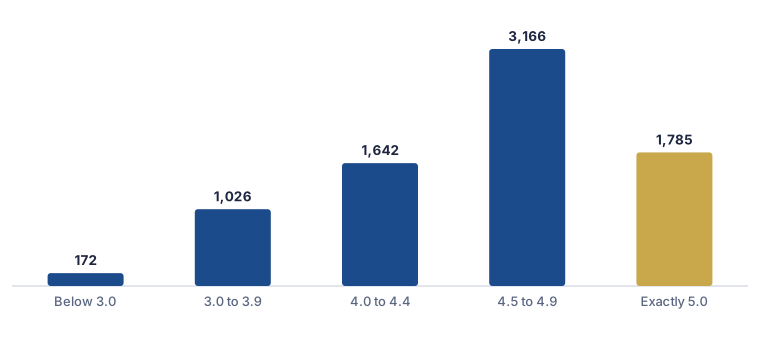
When everyone is near the top, the rating stops sorting
Almost two thirds of these firms, 4,951 of 7,791, sit at 4.5 stars or higher. The average is 4.49 and the median is 4.7. A full 1,785 firms hold an exact 5.0. Fewer than 200 sit below 3.0.
Think about what that does to your search. If you rule out anything under 4.5, you've just eliminated roughly a third of firms and kept the other two thirds, most of them within a few tenths of a star of each other. The rating feels precise, but it barely separates one firm from the next.
The perfect score is often the least reliable
A 5.0 looks like the best possible grade. It's often the shakiest. Of the 1,785 firms with an exact 5.0, nearly 30 percent got there on fewer than ten reviews. A handful of happy clients, or a few friends and family, is enough to plant a perfect score. It takes far more feedback to hold one.
The pattern is clear when you group firms by how many reviews they have. The average rating actually climbs as the number of reviews grows.
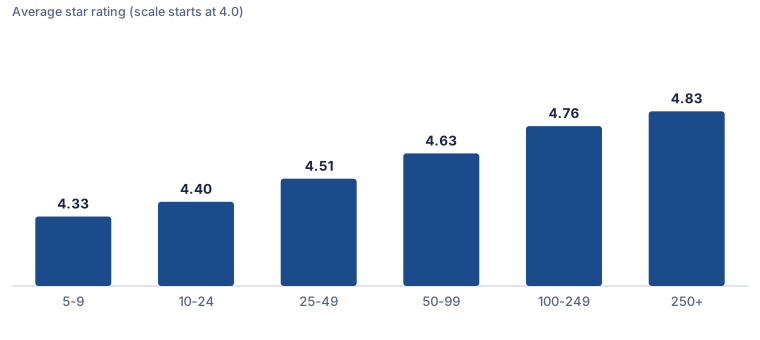
Firms with five to nine reviews average 4.33. Firms with 250 or more average 4.83. In other words, a 4.7 backed by 400 reviews is a stronger signal than a 5.0 backed by six. The score with the most evidence behind it tends to be both high and stable, because a firm can't keep hundreds of clients happy by accident.
What to read instead of the number
Use the star rating as a rough floor, then stop looking at it and start reading.
- Look at the review count first. Many reviews at a solid rating beats a perfect rating with a handful.
- Read the recent reviews, not the best ones. Ratings from the last year tell you how the firm works now.
- Look for detail that matches your problem. A review that describes a real estate closing or a custody file is worth more to you than "great service, highly recommend."
- Watch how the firm answers criticism. A calm, specific reply to a bad review says more than any score.
Ratings are a starting filter, not a decision. When you're ready to compare firms on the things that actually matter, you can start your search here.
Frequently asked questions
Is a 5-star law firm better than a 4.7-star firm?
Not necessarily. A 5.0 built on a few reviews is a weak signal, while a 4.7 built on hundreds is a strong one. In our data, firms with more reviews tend to have higher average ratings, so the review count matters as much as the score itself.
How many reviews should a law firm have before I trust the rating?
There's no magic number, but more is better. Ratings based on dozens or hundreds of reviews are far more stable than those based on a handful. Treat a high score with very few reviews with caution.
Do Google reviews tell you if a lawyer is good?
Only partly. Reviews capture service and communication well, and those matter. They rarely capture legal skill or the outcome of a case, which clients aren't always in a position to judge. Use reviews alongside a lawyer's experience with your specific type of matter.